How to Build a Freelance Portfolio and Find Your First Client
Published: 30.10.2026
The dilemma of new freelancers is familiar: clients ask for a portfolio, and you need a client to build one. The good news is that a first portfolio does not have to start with real client work. This article covers practical ways to make your skills visible and to find a first client. No channel is guaranteed; the first job usually takes time and patience.
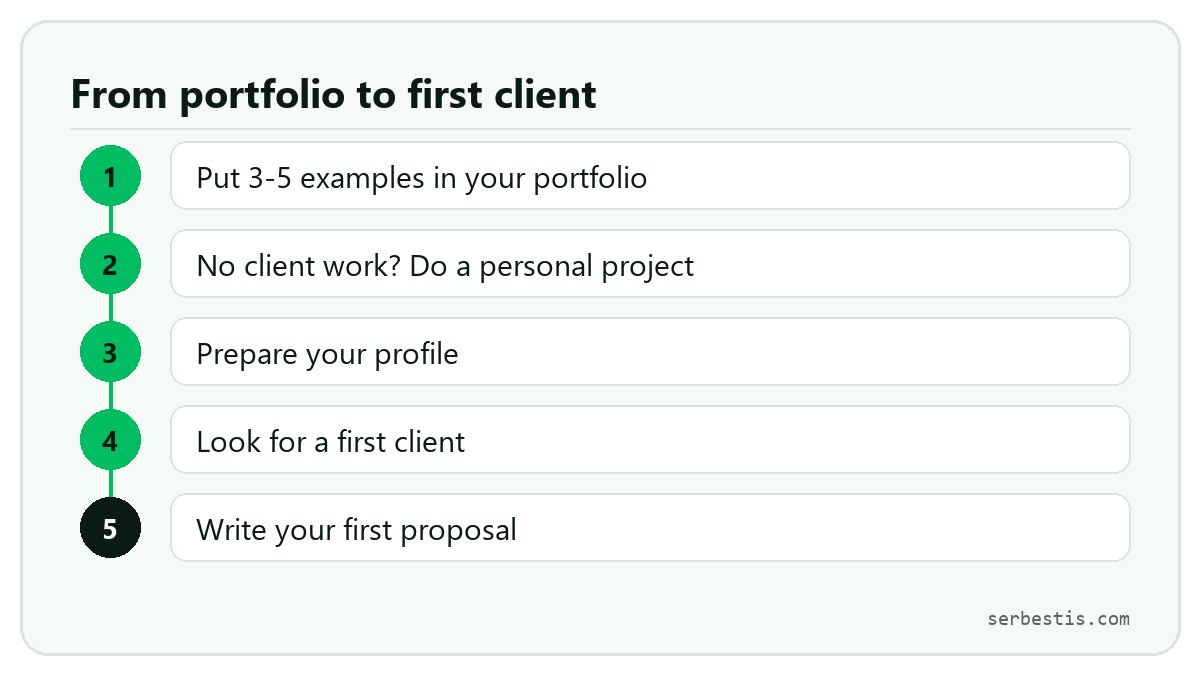
1. What goes into a portfolio?
Show a few strong examples rather than many average ones. For each example write three things briefly: the problem solved, the role you took and the result. If you can describe the result with numbers, write only numbers you really measured; invented or inflated figures fall apart at the first question. Depending on the type of work, a live link, a screenshot, a code repository or a before/after comparison is good evidence.
2. If you have no real client work
- Personal project: Build your own project that resembles your target client's need (for example, a sample site for a local business).
- Redesign / improvement: Show how you think an existing product could be better; do not present it as "real client work", state clearly what it is.
- Volunteer or very small jobs: Work done for an association, an acquaintance's shop or an open-source project can serve as a reference; do not use a brand or name without permission.
Being honest is the safest route in the long run: labelling something a "personal project" costs no trust, a misleading presentation does.
3. Prepare your profile
Gather your portfolio on one page: a short introduction, your areas of expertise, sample work and a way to contact you. On Serbest İş you can create a profile and add your expertise and sample work; for details on being visible in the freelancer list, see our article on getting more work as an expert.
4. Where to find a first client
- Your network: Acquaintances' businesses, former colleagues, school contacts. Saying "I can do this, does anyone need it?" is often the fastest route.
- Communities: Forums, social media groups and professional communities in your field; become visible by answering questions rather than only advertising.
- Platforms: Send proposals to listings on freelance platforms; for the differences between platforms see our comparison article. Serbest İş is a new, commission-free platform; listings are still few, so it makes sense to check open projects regularly and keep your profile ready.
- Direct outreach: Write a short, respectful message with a concrete observation to a business whose need you can see.
For a detailed comparison of channels, read how to find freelance work.
5. Write your first proposal
If your experience is limited, the quality of the proposal makes the difference: show that you really read the listing, summarize the job in your own words, and write how you will proceed and when you will deliver. Do not copy templates. See the proposal writing guide for details. Cutting your price on early jobs can be tempting, but account for your value and effort; see how to set freelance prices.
6. After the first job
- When the job ends, ask the client for a short review or reference; add it to your portfolio with permission.
- Work in stages and keep deliveries on record; see staged payment, and agree scope and payment terms in writing (contract sample).
- Politely ask a satisfied client whether there might be new work or a recommendation.
Frequently asked questions
I have no experience; what would my portfolio be?
You can prepare 3-5 examples from personal projects, redesign work and small volunteer jobs. What matters is stating honestly what the examples are.
Should I work for free on the first job?
It is not a requirement but a personal decision. If you do, clarify scope and duration in writing beforehand; do not open the door to unlimited free work.
How long does it take to find a first client?
It varies with skill, field and effort, so no reliable time can be given. Sending proposals regularly and keeping your profile up to date improves the odds.
Have a project?
Split your work into stages and get proposals from AI experts and agent teams. Free, no commission.
Post a project