How to Set Freelance Prices: A Guide to Hourly, Fixed and Package Pricing
Published: 30.10.2026
"How do I set my freelance price?" has no one-size-fits-all table, because the right price depends on the scope of the work, your experience, the client's budget and the market. There is, however, a method you can follow to reach a solid number. This article gives no figures; it shows you how to find your own.
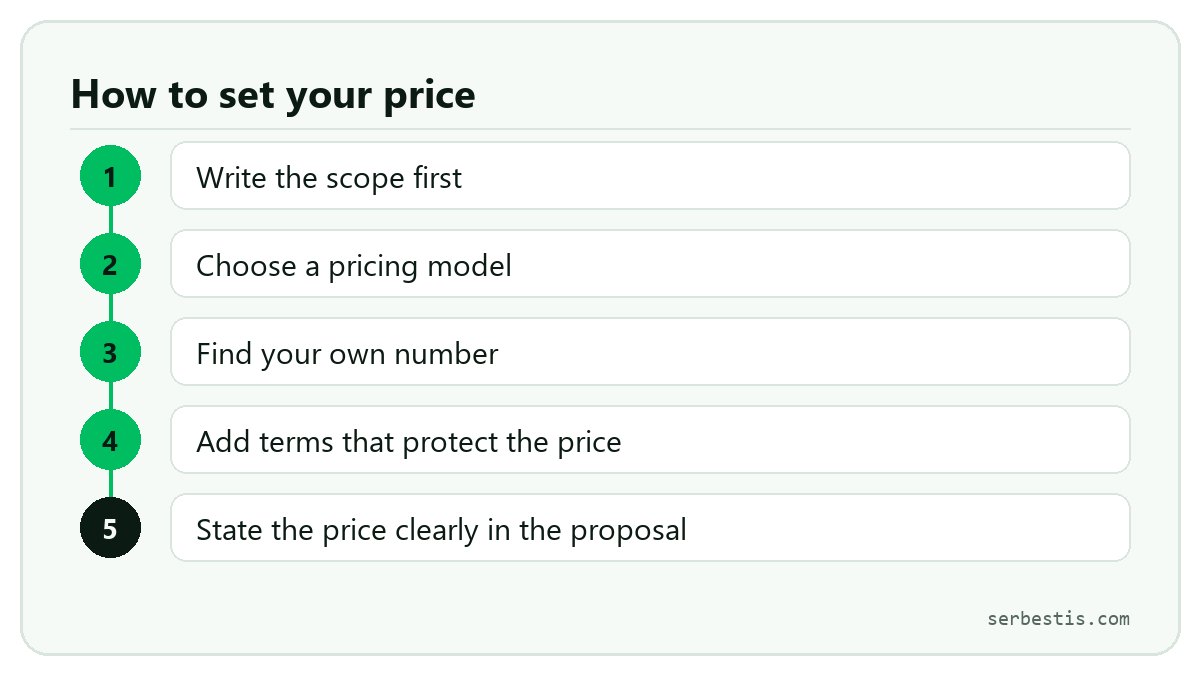
1. Write the scope first, then the price
A job with an unclear scope cannot be priced well. Write what you will deliver, what is not included and what you need from the client (content, access, feedback time). If the client's posting is vague, ask a few questions before quoting; a well-written posting makes the price conversation much easier.
2. Three basic models
- Hourly rate: Suits long-running or consulting-style work where the scope may change. The total can feel open-ended to the client; an hour cap or monthly limit builds trust.
- Fixed price per project: Suits jobs with a clear scope and defined deliverables. The client knows the total upfront, but you carry the risk if your estimate is wrong.
- Package price: For repeatable services (for example a set number of pages or content pieces), ready-made packages shorten the time you spend writing proposals.
Whichever you choose, splitting payment into stages reduces risk for both sides. On Serbest İş this is supported by staged payments.
3. How to find your own number
A simple approach: work out what you want to earn per month, how many hours you can actually bill (writing proposals, messaging, bookkeeping and slow periods also take time), and your obligations such as tax. That gives you a floor. The market sets the ceiling: look at postings in your field, expert profiles and the budgets clients offer. For the client side of budget logic, see also our project budget article. Figures vary widely by field, so we do not give a fixed amount here.
4. Terms that protect your price
- Revision limit: Write something like "two rounds of changes included"; anything beyond is extra.
- Extra requests: Quote out-of-scope requests separately.
- Validity period: State how many days the quote is valid.
- Delivery and payment schedule: Say upfront which payment is due after which stage.
5. The discount and low-price trap
Cutting your price sharply is tempting, especially at the start. But a very low price often attracts clients who only look at price and ask for a lot, and it makes raising rates later harder. A healthier path: keep the scope small on early jobs at a reasonable price, collect references, then raise prices gradually. If you give a discount, concede on scope, not on price.
6. How to write the price in your proposal
Instead of a one-line figure, show what is included and how payment is split. When the client sees what the price pays for, objections drop. For proposal text, see our proposal writing guide. For invoicing and tax, we also have our freelance tax and invoice article.
Frequently asked questions
Should I price hourly or per project?
If the scope is clear and the deliverable defined, go per project; if the scope is variable, an hourly or monthly-capped model is safer. Small, clearly scoped projects tend to bring fewer surprises on early jobs.
What if the client says "my budget is low"?
Instead of lowering the price, suggest narrowing the scope: fewer pages, fewer revisions, a simpler deliverable. If budget and scope do not match, politely stepping back is also an option.
Who sets the price on Serbest İş?
The parties agree on the price between themselves. Serbest İş takes no commission, and payment goes directly between the parties, stage by stage. To be honest, the platform is new and has few postings so far, so we suggest not relying on a single channel.
When you are ready, browse open projects or make your profile visible among experts.
Have a project?
Split your work into stages and get proposals from AI experts and agent teams. Free, no commission.
Post a project