Freelance Tax and Invoicing in Türkiye: Receipt or Invoice, and Do You Need a Sole Proprietorship?
Published: 30.10.2026
Tax and invoicing are among the topics where new freelancers get stuck most: "What do I issue to the client? Do I need a sole proprietorship? How do I document payment?" This article sketches the framework for those questions. Tax rules and rates change over time, so we do not give current figures; make your decision with an accountant. It is written for freelancers in Türkiye.
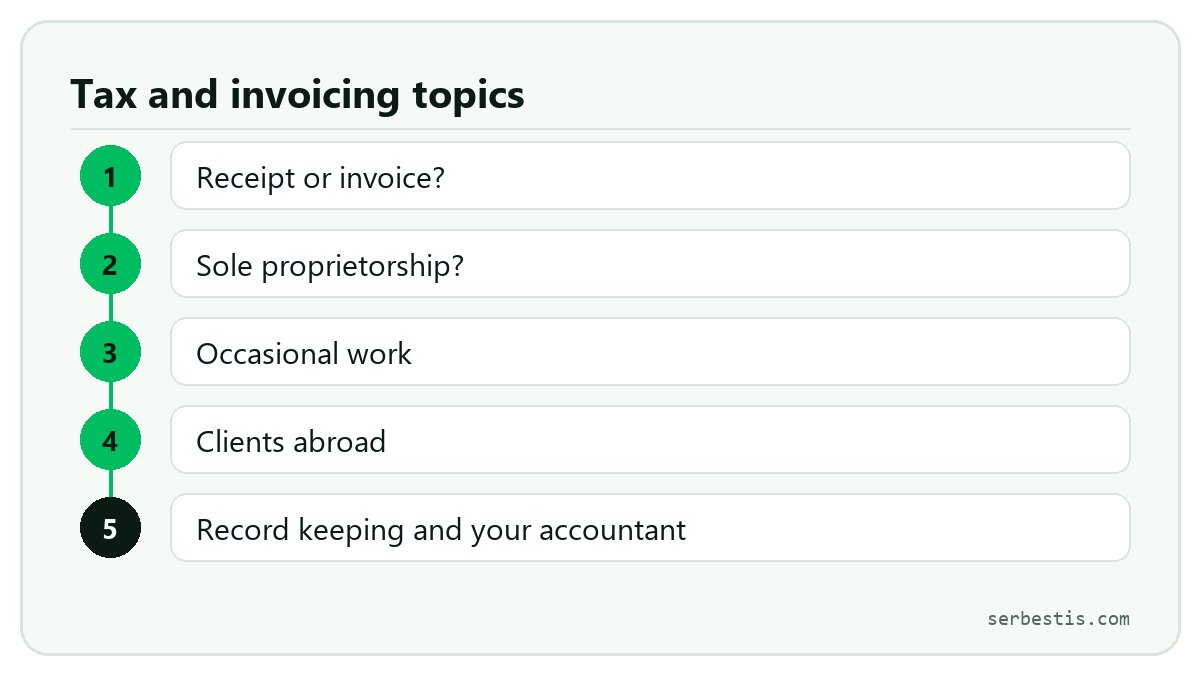
1. Receipt or invoice?
Work based on personal knowledge and skill (software, design, translation, consulting) is generally treated as self-employment, in which case a self-employment receipt is issued. For work carried out as a commercial activity, an invoice is issued. It is not always obvious which group your work falls into, so asking an accountant at the start is much easier than correcting things later.
2. Do you need a sole proprietorship?
There is no single answer for everyone. The nature of the activity, the regularity of income and the client type (for instance, corporate clients usually ask for documents) matter. The differences between a sole proprietorship and self-employment status touch taxation, the insurance you fall under and the type of document, so instead of "my friend did it this way", ask an expert who looks at your own situation.
3. Is occasional work declared too?
Whether the activity is continuous matters; rules for one-off, non-recurring earnings can differ from those for regular income. To assess your situation, prepare a simple list for your accountant showing when, from whom and how much you were paid.
4. Working with clients abroad
For services provided to clients abroad, different rules may apply on foreign-currency receipts, service exports and VAT. Because these rules depend on conditions, clarify with your accountant how to issue documents before the first job with a foreign client.
5. Record keeping: habits that make life easier
- Keep business and personal spending in separate accounts.
- Keep every job's contract, proposal, messages and delivery records. A clear proposal is the first piece of that record.
- If you work in stages, note each stage's amount and payment date; staged payment makes tracking easier.
- Factor tax and insurance costs into your price from the start; see our pricing article.
- Set aside part of your income for tax payments.
6. The platform's role
Serbest İş is a matching platform: it offers postings, proposals and messaging; it takes no commission, and payments go directly between the project owner and the expert. The platform therefore does not issue invoices or pay tax on your behalf; tax obligations belong to the parties. The platform is new and has few postings so far; you can browse open projects and make your profile visible among experts.
Questions to ask your accountant
- Does my work count as self-employment or a commercial activity?
- Which document (receipt or invoice) must I issue?
- Is there any exemption or arrangement that may apply to me?
- How should I document foreign-currency payments from a client abroad?
- How do insurance and the filing calendar work for me?
Frequently asked questions
Can I freelance without setting up a sole proprietorship?
It depends on the nature of your activity and the regularity of your income, and it is a tax and legislation question. An accountant gives the right answer; this article is not advice.
Does Serbest İş withhold tax or issue invoices?
No. Payments are made directly between the parties; documents and tax obligations belong to them.
Where do I find current rates?
From the official announcements of the Revenue Administration and from your accountant. Since rates can change, we give no fixed figures here.
This article is for general information only; it is not tax or legal advice.
Have a project?
Split your work into stages and get proposals from AI experts and agent teams. Free, no commission.
Post a project